Swallowing and Mealtime Management
Swallowing and mealtime skills support a child’s ability to eat and drink safely, comfortably and enjoyably. These skills involve coordination of the lips, tongue, jaw and throat, as well as posture, breathing and sensory regulation. Mealtimes are also social experiences, and difficulties can impact nutrition, growth and family routines.
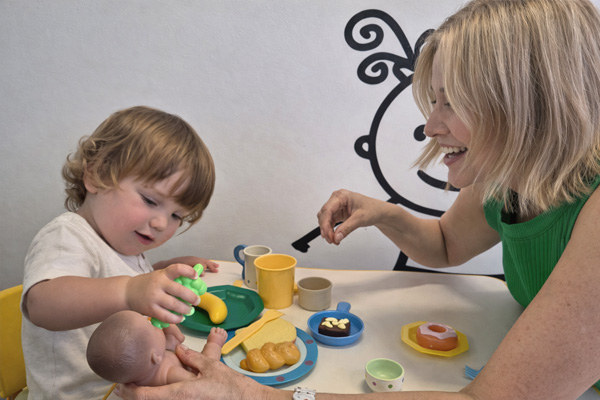
Some children may have difficulties with chewing, swallowing or managing different food and drink textures (for example coughing or gagging during meals, taking a long time to chew, avoiding certain textures, or becoming upset at mealtimes). These difficulties can be related to motor coordination, sensory sensitivities, medical history or developmental differences.
Swallowing and Mealtime Assessment
A swallowing and mealtime assessment is child-centred and family-focused. It may include:
- Gathering a detailed feeding and medical history.
- Observing a child eating and drinking familiar foods.
- Looking at chewing, swallowing and coordination.
- Considering posture, breathing and endurance.
- Discussing family concerns and mealtime routines.
The assessment helps identify whether mealtime difficulties are within typical development or if additional support is needed.
Swallowing and Mealtime Therapy
Support is individualised and respectful of each child’s needs and preferences. Intervention may:
- Support safe and efficient chewing and swallowing.
- Gradually increase tolerance of different textures and foods.
- Provide strategies to reduce stress and improve mealtime comfort.
- Support positive, pressure-free mealtime routines.
- Work collaboratively with families and other health professionals if needed.
The focus is on safe swallowing, positive mealtime experiences and supporting children to participate comfortably in family meals.
For more information on Swallowing and Mealtimes for children, visit:
- Eating and Mealtimes on The Royal Children’s Hospital website: https://www.rch.org.au/uploadedFiles/Main/Content/speech/200101%20FandE%20Eating%20and%20Mealtimes%20A5%20Booklet_FA_WEB.pdf
- The Feeding Clinic website: https://www.thefeeding.clinic/our-services-1