Orofacial Myology
Orofacial myology focuses on how the muscles of the face, mouth and tongue work together at rest and during everyday activities such as breathing, chewing, swallowing and speaking. These patterns support healthy facial growth, speech clarity and feeding skills.
Resting posture
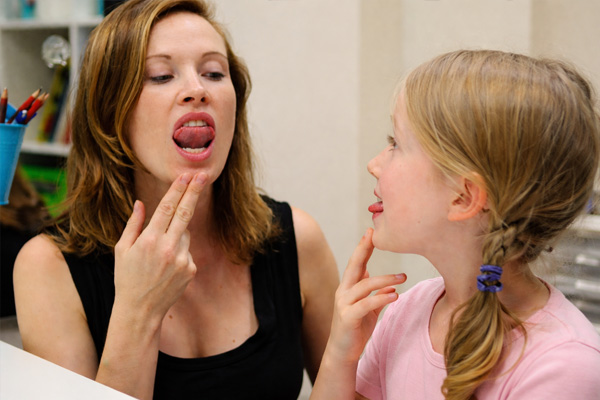
This includes how the lips, tongue and jaw rest when a child is not talking or eating. Ideally, lips are gently closed and the tongue rests up in the mouth.
Breathing patterns
Breathing through the nose supports healthy oral development. Ongoing mouth breathing can affect facial growth, sleep, attention and speech.
Swallowing patterns
Some children use an immature or inefficient swallow, such as tongue thrusting, where the tongue pushes forward during swallowing.
Oral habits
Habits such as thumb or finger sucking, prolonged dummy use, nail biting or chewing on objects can affect tooth alignment and oral muscle patterns.
Facial and jaw development
Differences in muscle function can influence dental alignment, bite, facial symmetry and speech production.
Orofacial myofunctional patterns develop over time, and some children benefit from targeted support to establish efficient, healthy habits.
Orofacial Myology Assessment
An orofacial myology assessment is gentle and child-friendly. It may include:
- Observing lip, tongue and jaw posture at rest.
- Looking at breathing patterns.
- Watching chewing and swallowing.
- Reviewing oral habits and history.
- Liaising with dentists, orthodontists, GPs or ENTs when needed.
The assessment identifies functional patterns that may benefit from support.
Orofacial Myology Therapy
Orofacial myology therapy is individualised and may:
- Support correct tongue and lip resting posture.
- Improve nasal breathing habits.
- Address tongue thrust and swallowing patterns.
- Support reduction of oral habits.
- Work alongside dental and medical professionals.
Families are guided with simple exercises and strategies to support change within everyday routines.
For more information Orofacial Myology for children, visit:
- The Orofacial Myofunctional Disorders page on the American Speech-Language-Hearing Association website: https://www.asha.org/public/speech/disorders/orofacial-myofunctional-disorders/?srsltid=AfmBOor8ujBRMilMFm6K0RYCALf0BcYmAVgfV6NuI0bG38CiNIgWnxOQ