Autism Diagnostic Assessments
At Smart Talk Therapy for Kids, we offer joint autism diagnostic assessments completed by a Speech Pathologist and a Registered Psychologist, in line with national best practice guidelines. Assessments are available at our Wembley and Currambine clinics.

Autism assessments can only be conducted for children who:
Have received a referral from a paediatrician for an Autism assessment
OR
Are on a waitlist for a paediatrician and have clearly documented signs of Autism.
Consideration for older individuals is on a case-by-case basis.
Please note that you will not be eligible for Medicare rebates if you do not have a referral from a paediatrician.
What is Autism?
Autism Spectrum Disorder (ASD) is a complex neurodevelopmental disability characterised by unique patterns of:
- Language and communication
- Social skills
- Sensory experiences
- Interests
- Ways of thinking
These differences manifest uniquely in each individual and are integral aspects of a person’s identity.
Our Clinicians & Assessment Team
Autism assessments are completed jointly by an experienced Speech Pathologist and Registered Psychologist, with findings provided to your child’s Paediatrician for diagnostic review.
Natara
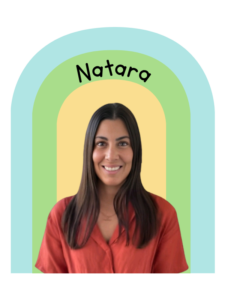
Natara’s passion for working with children began with her primary school teaching degree before completing her Bachelor of Science in Speech Pathology (Honours). Natara has a special interest in early intervention and autism.
She believes in empowering parents with the knowledge to support their children outside the clinic. To provide comprehensive autism assessments, she has completed additional training in administering the ADOS-2 assessment. Natara is a current board member of the WA Autism Diagnostic Forum.
Jessica
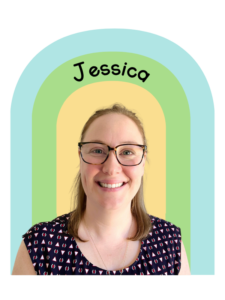
Jessica has a longstanding history of working with autistic and other neurodivergent individuals. She has a particular passion for the female neurodivergent presentation and associated symptoms (including Pathological Demand Avoidance and eating disorders). She advocates for and supports autistic individuals within their communities, including schools, local groups, and family members.
Jessica has a Bachelor of Speech Pathology (Honours) and a Graduate Certificate in Assessment and Diagnosis of Autism (inclusive of ADOS-2 qualification). She is a current member of the WA Autism Diagnostic Forum.
Joel
We work in partnership with Joel, Registered Psychologist from Blue Waves Psychology, who completes the psychological component of the autism assessment alongside our Speech Pathologists. This collaborative approach supports a shared understanding of your child’s strengths, differences and support needs.
Our Process
The autism assessment includes:
- A child assessment using the ADOS-2. The ADOS is a semi-structured, standardised assessment of communication, social interaction, play, and restricted and repetitive behaviors.
- A language assessment if one has not been completed recently
- A comprehensive developmental history interview with caregivers
- An in-depth interview with caregivers to discuss the child’s presentation.
- Psychological assessment completed by the Registered Psychologist
Appointment structure and timing will be discussed with families prior to booking.
Education and Professional Consultation
With consent, we consult with schools or early learning settings to understand how your child functions in social and structured environments. School observations may be completed where required.
Report and Feedback
The Speech Pathologist and Registered Psychologist work collaboratively and liaise with your child’s Paediatrician to reach a shared understanding of your child’s presentation.
Findings and recommendations are compiled into a comprehensive joint report, which is provided to the Paediatrician for diagnostic review. Families attend a feedback session to discuss results, recommendations and next steps, including therapy supports and referrals.
Reports and feedback are typically completed 6 to 8 weeks after the assessment process begins.
Unsure Whether Your Child Needs an Autism Assessment?
If you are concerned about your child but have not yet seen a paediatrician or psychologist, we offer consultation and screening appointments to help determine whether a full autism assessment would be beneficial.
Additional Resources
For updated information and waitlists for providers, please consider looking at Perth Kids Hub https://perthkidshub.com.au/
Instagram Accounts:
- @neurowild_
- @mrsspeechiep
- @autism.masterclass
- @onwardsandupwardspsychology
- @neurodivergent_lou
Organisations:
- Reframing Autism
- I CAN Network
Books for Parents and Children:
- Start Here: A Guide for Parents of Autistic Kids by Autistic Self-Advocacy Network
- Avoiding Anxiety in Autistic Children: A Guide for Autistic Wellbeing by Dr. Luke Beardon
- Different Like Me: My Book of Autism Heroes by Jennifer Elder
- The Brain Forest by Sandhya Menon
- The Rainbow Brain by Sandhya Menon
- Talking With Your Child About Their Autism Diagnosis: A Guide for Parents by Raelene Rundon
- A Parent’s Guide to Autism Diagnosis: What to Expect and How to Support Your Child by Sophia Mooncey
- All Cats Are on The Autism Spectrum by Kathy Hoopmann
- Parent Workshops:
- Autism Education Workshop by Onwards & Upwards Psychology
- The Autism and Neurodiversity MasterClass
Ways To Support Children to Learn About an Autism Diagnosis:
- The I CAN Network has some great suggestions for resources to assist in talking about autism here: https://icannetwork.online/talking-about-autism/
- My Brain is Autistic from Neuroclastic is a great place to start. Explaining Autism to Kids by Dr Liz Angoff is another excellent free resource, along with her bank of Videos & Visuals for Explaining Neurodivergence.
Language Matters:
- Autism falls under the umbrella of “neurodivergence”, and we refer to autistic brains as neurodivergent brains.
- Autism is also referred to as a ‘neurotype’.
- Most adults in the autism community prefer to say, ‘I am autistic’ instead of ‘I have autism’. This is called identity-first language.
- We don’t use ‘high functioning’ or ‘low functioning’, as these are obsolete terms. Instead, it is better to discuss the level of support an autistic individual needs. This can change across their development and throughout their life.
- The autism spectrum does not refer to how “severe” a person’s symptoms are. It represents how many different traits of autism can present in other individuals.
Community Services and Supports:
Parents are encouraged to register for the Positive Partnership Online Portal (http://www.positivepartnerships.com,au/) to access interactive learning modules and other useful learning resources specific to autism.